Blog
The Truth About Tile Flatness: What Tile Flatness Really Means
Tile flatness is not about finding a perfectly flat porcelain tile. It is about understanding acceptable tolerance, checking warpage and lippage properly, and watching for roller marks before installation.
What This Guide Covers
Tile flatness is not about finding a perfectly flat porcelain tile. It is about understanding acceptable tolerance, checking warpage and lippage properly, and watching for roller marks before installation.
Read the Full Guide
Why perfectly flat tile is not realistic
A tile fact that surprises many buyers is simple: a perfectly flat tile does not really exist.
Even after years of development in the porcelain tile industry, absolute flatness is not a realistic quality standard. Tile flatness should be understood as a controlled tolerance, not as a promise that every tile will behave like a sheet of glass.
This matters because buyers often reject good tiles for the wrong reason, while missing more serious surface problems that cannot be fixed after installation.
What tile flatness really means
In the tile industry, tile flatness usually refers to two related conditions.
- Center curvature means the center of the tile is slightly higher or lower than the edges.
- Warpage means the tile has a slight bend or twist instead of lying completely flat.
According to common tile quality expectations, acceptable flatness is controlled within a defined range. For example, the deviation may be expected to stay below +/-0.2%, with the maximum value not exceeding 2 mm.
So the real question is not "Is this tile perfectly flat?" The better question is "Is this tile within the proper standard?"
Why the back-to-back test is limited
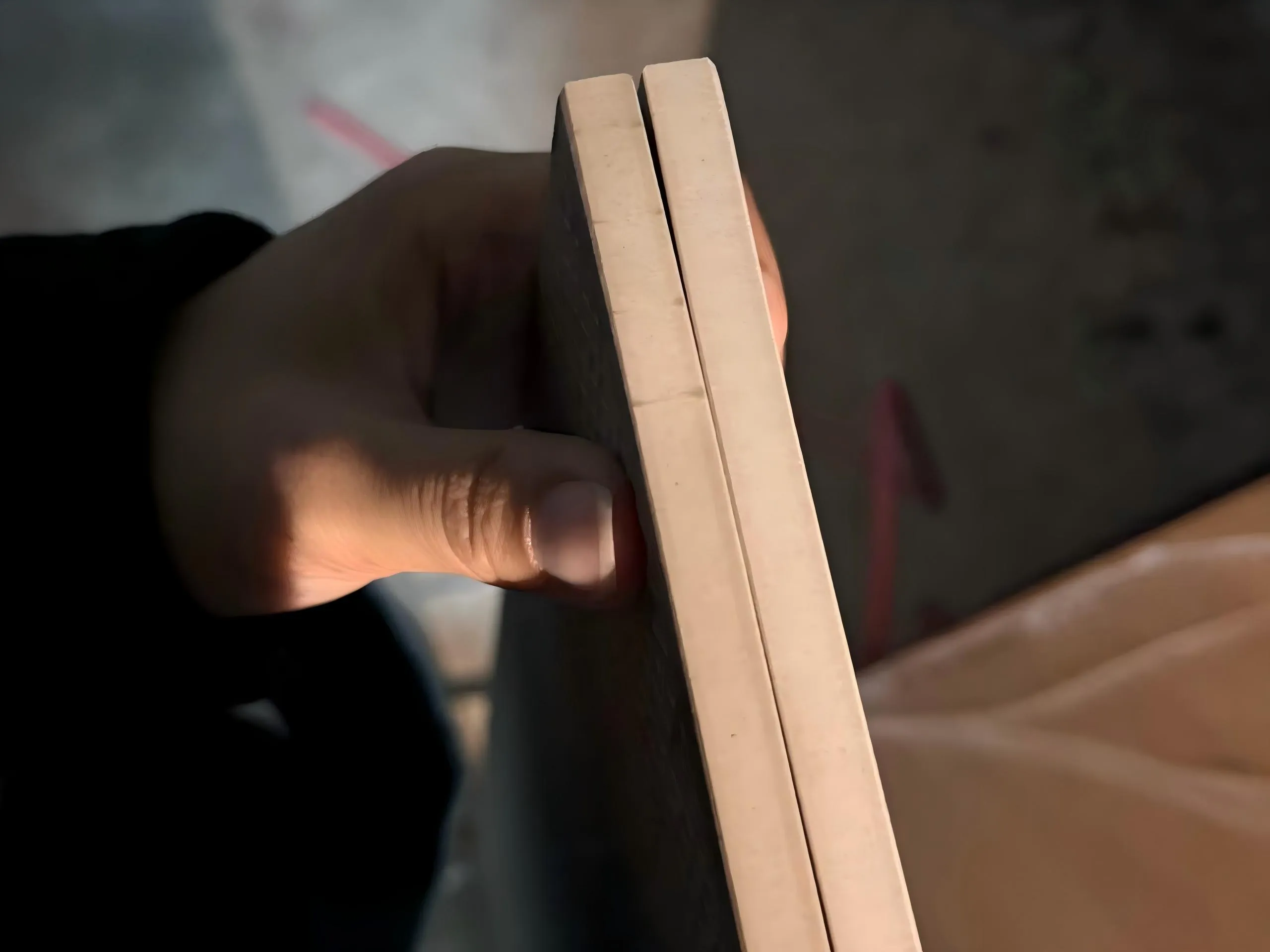
You may have seen this tile checking tip online: put two tiles back to back. If they do not fit tightly together, the tiles are not flat.
It looks simple and feels convincing, but it is not professional enough on its own.
First, this method does not work well for many modern textured tiles. Textured porcelain tiles often use mold technology to create natural stone effects, carved texture, or handmade surface details. Their surface is designed to have depth and touch, not to look like perfectly smooth glass.
Second, real tile flatness is not judged by zero gap or perfect contact. In tile production, zero flatness deviation does not exist.
How buyers can check tile flatness
Normal buyers can still do a practical tile flatness check. The key is to use a more reasonable method instead of relying on one social media shortcut.
Check the inspection report
A professional inspection report is more reliable than a tile hack. Look for data related to flatness, size tolerance, water absorption, breaking strength, and surface quality.
For tile buyers and contractors, these numbers are more useful than only looking at two tiles back to back. They show whether the tile meets the required standard before installation begins.
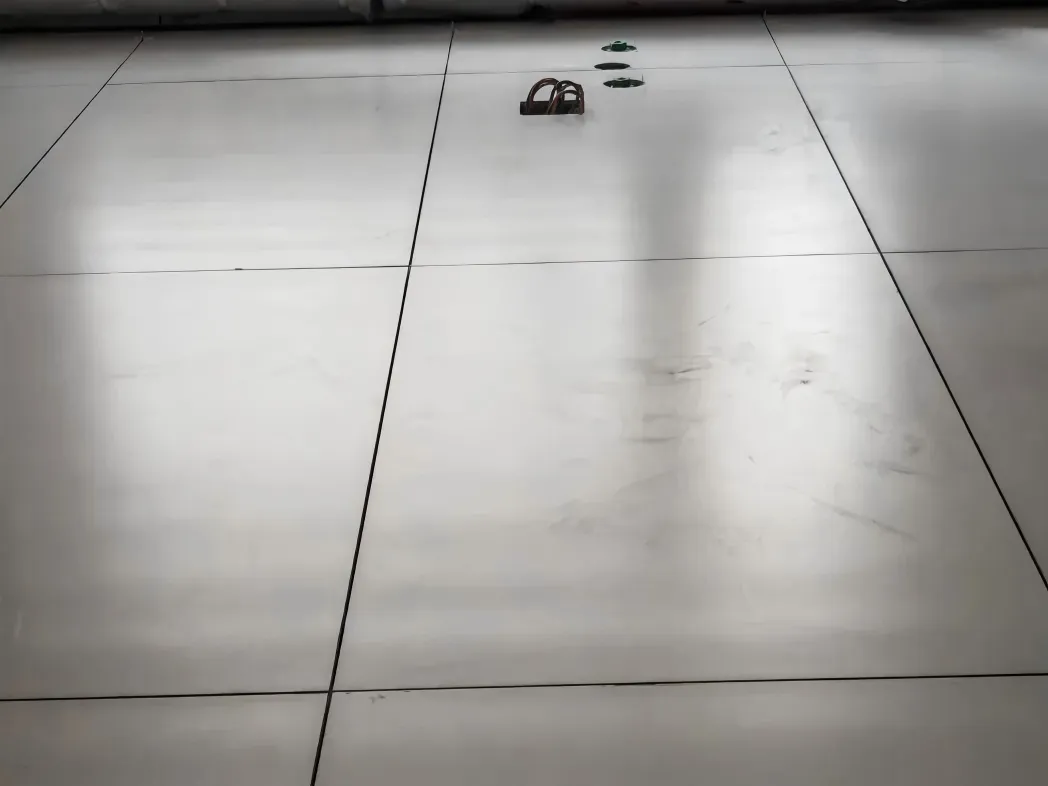
Lay several tiles on a flat floor
Take several tiles from the same model and place them on a flat surface. Then check them from different angles.
- Does the surface look visually even?
- Do the edges look stable?
- Is there any obvious lippage?
Lippage means one tile edge is higher than the tile next to it. A tiny difference may be normal, but if the edge feels very obvious underfoot or visually breaks the clean look of the floor, it needs attention.
This method is closer to real installation than the back-to-back test because it shows how multiple tiles behave together across a surface.
Good tile quality is not enough
Even if the tile itself is qualified, the final floor or wall may still look uneven if the installation is not done properly.
Tile flatness after installation depends on three things.
- The quality of the tile.
- The skill of the installer.
- The tools used during installation.
For large-format tiles, a tile leveling system is strongly recommended. Tile adhesive may shrink slightly during curing. Without leveling tools, that movement can lead to uneven tile edges and a less refined finish.
Do not save money on leveling tools when installing large-format tiles. A small tool can make a big difference in the final result.
The problem many buyers ignore: roller marks
While many people worry too much about tile flatness, a more serious visual problem is often ignored: roller marks.
Roller marks are also called wave marks. They are continuous strip-like or wave-like marks on the tile surface. They may appear during kiln firing, when the tile moves through the kiln on rollers. If the tile body is not stable enough during this process, the roller marks can become too obvious.
The problem is that roller marks cannot be fixed during installation. If the marks are heavy, they may affect the beauty of the tile surface, especially under side lighting or in a large open space.
When checking a tile, also ask whether there are obvious wave-like marks. This is the detail many buyers miss.
Final takeaway
Tile flatness should be understood, not feared. A qualified tile is not a tile with no deviation. A qualified tile is a tile within the accepted tolerance range.
Use a tile leveling system for large-format tile installation, check the inspection report before making a judgment, and do not ignore roller marks when viewing tile samples under real light.
FAQ
Do perfectly flat porcelain tiles exist?
Not in a practical production sense. A qualified tile is not a tile with zero deviation. It is a tile that stays within the accepted tolerance range for flatness, warpage, size, and surface quality.
Is the back-to-back tile test reliable?
It can help reveal obvious warpage, but it should not be the only judgment. Textured surfaces, designed relief, and normal production tolerance can all create visible gaps, so buyers should also check inspection reports and lay several tiles on a flat surface.
Supporting Images
These supporting visuals reinforce the installation issue and prevention guidance covered above.